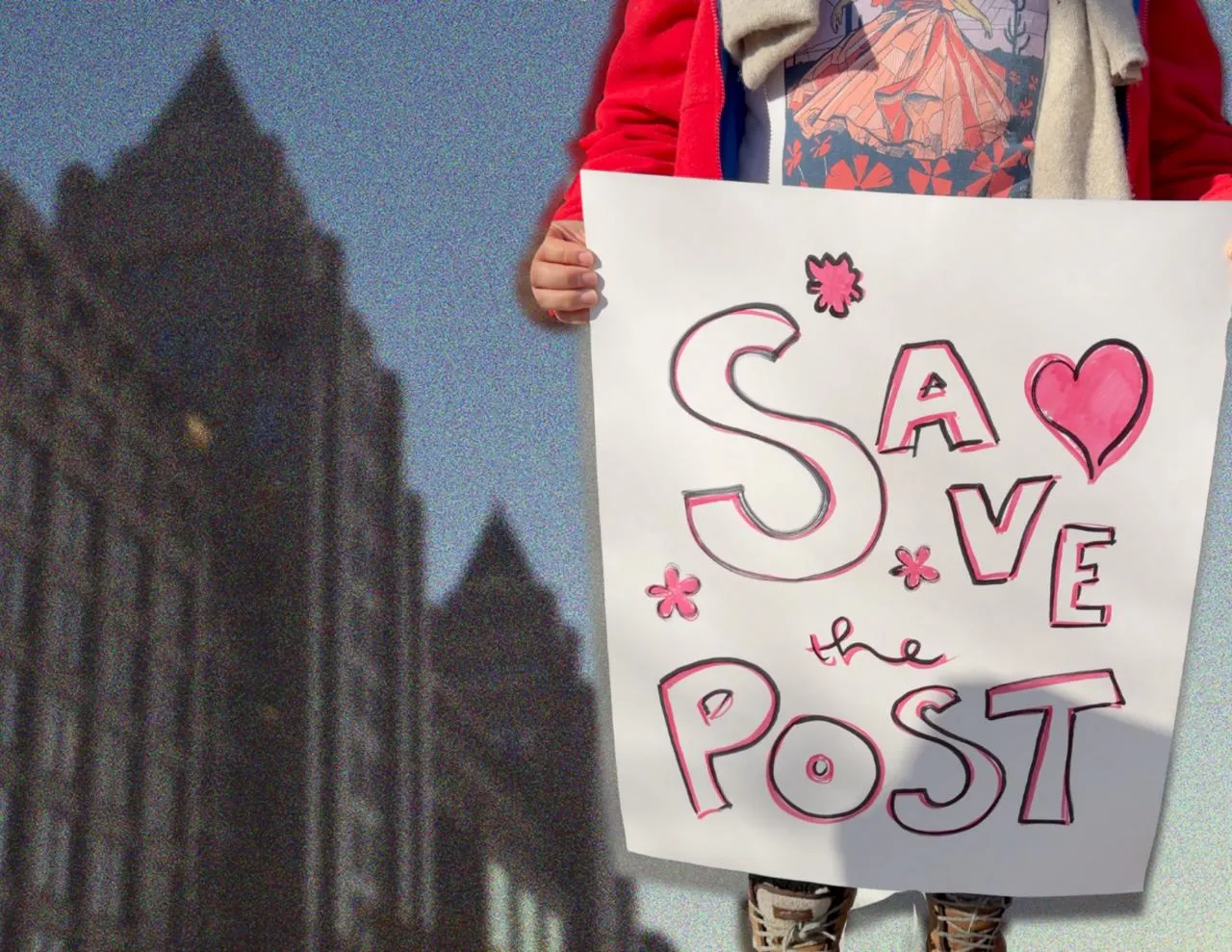
On Wednesday, February 4th, The Washington Post announced historic layoffs in what former editor Marty Baron called “among the darkest days in the history of one of the world’s greatest news organizations”.
Marissa Lang, a Pulitzer Prize winning journalist and lead organizer with The Post Guild, spoke to El Tiempo Latino after learning that she was one of over 300 journalists impacted by the layoffs. Speaking outside her former office, Lang said this was “a devastating blow to the Washington Post and to our local community.”
“I do fear that it means that there will be a lot of stories untold, a lot of corruption that goes unchecked, and a lot of people who go without their stories being heard”, she said.
I first met Marissa when she was matched as my mentor during the Student Project at the 2023 National Association of Hispanic Journalists Conference. She worked on a team of video, audio, photo, and print journalists who each volunteered their time to mentor a newsroom of student scholarship recipients covering the conference.
In a windowless room tucked away in a corner of the Intercontinental Miami, Marissa sat next to me and showed me one of my first glimpses into the discipline that powers professional journalism. Her precision and tireless attention to detail were fundamental in my perception of what a good journalist truly looks like.
In one of the most overwhelming weeks of my life, Marissa was a light, a bright spot of inspiration that calmed the chaos around our coverage and centered my concentration on the tasks at hand.
On our last day at the conference, I found Marissa at the final celebration party, NAHJ’s Gran Baile. Tears in my eyes, I gave her a hug and thanked her for her mentorship the last week. “You are exactly who I want to be when I grow up,” I told her.
Over the past three years, I’ve followed the work of each of my mentors and peers from that student newsroom. Even before I began covering local news in Washington DC, I was an avid reader of The Post’s Metro desk. Whenever I was struck by a powerful headline, or admired the editorial vision behind it, I’d often end up smiling after finding Marissa's name in the byline.
Who saw the 50th anniversary of Capital Pride as a chance to highlight the unwavering resilience of DC’s queer elders? Who made the consequences of climate change as visible as the trees that line our city? Who made sure that, amid the chaos of DC’s federalization, a local store owner still had her story told? The answer was always Marissa.
Marissa worked on the metro desk at The Post, what was once a team of over 50 journalists that will now be reduced to only 10 people. In her interview with El Tiempo Latino, she confirmed she was the only Spanish speaking journalist who worked on that desk.
I’ve spent just over six months covering the DC and DMV local government, and their impact on the DMV latino community. Covering Maryland middle schools, gay bars in Adams Morgan, or immigration detention centers in Virginia, I’ve learned that the power of my work goes beyond important information, into the connection created by listening to people and telling their stories.
My mission at El Tiempo Latino is inseparable from the work that Marissa and the metro desk were doing. Together with each of the other local newsrooms in the DMV, we worked to provide fair, free, and accessible information to Washingtonians, to keep them informed of exactly what was happening in their city. This mission will of course be impacted by Wednesday's layoffs. But I argue now that said impact is what makes it all the more important.
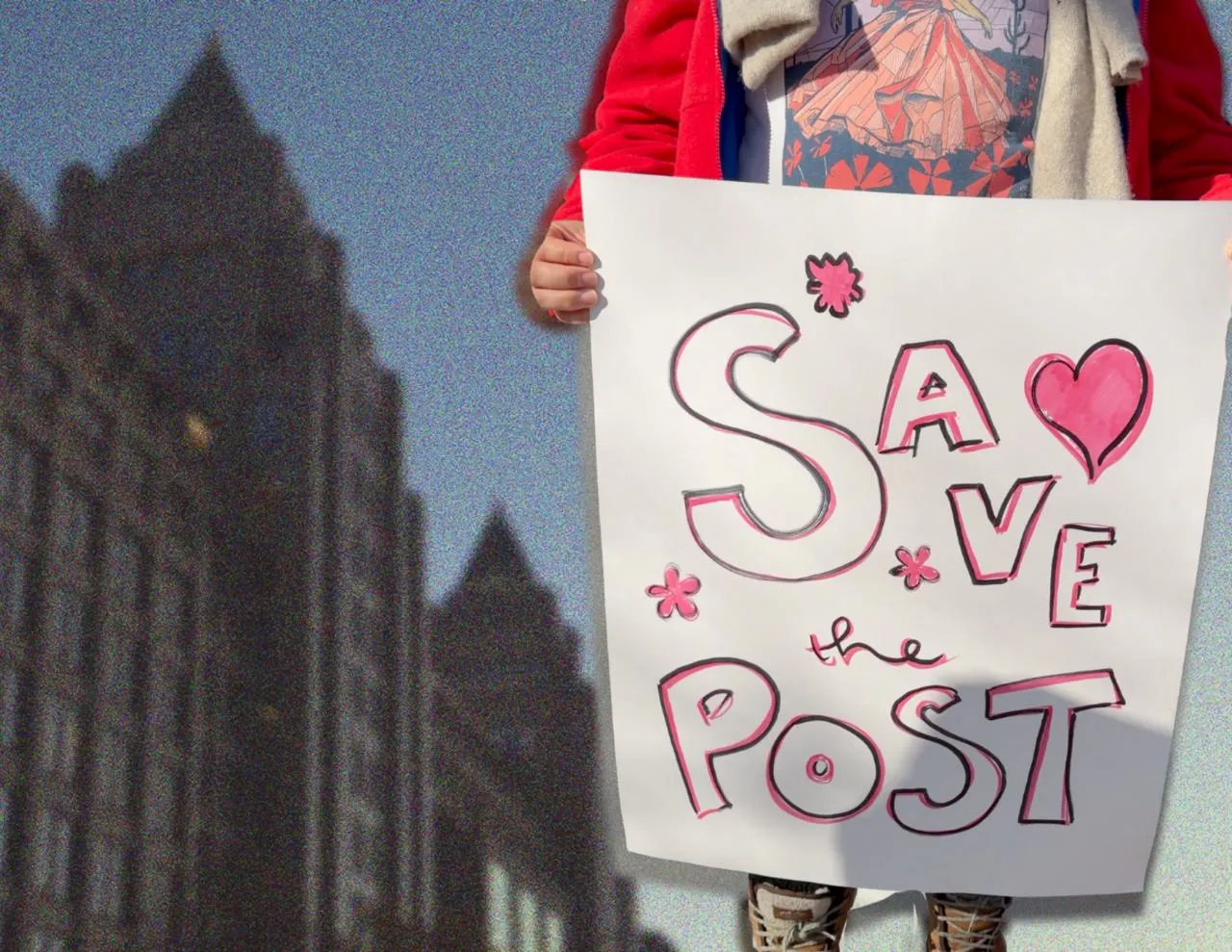
No one could summarize this mission and its importance better than Marissa herself. Speaking at a rally in front of the Washington Post building on Thursday, she said, “I’m a local reporter because I like to cover the community where I live. I like to be accountable to the people who are my neighbors and my friends. And I really do think that these job cuts are going to have a devastating impact on the D.C. region.”
Sitting at home with the world’s worst-timed fever, I watched Thursday’s rally with immense pride. Even in her grief, Marissa didn’t step away from the mic or her leadership. She spoke with conviction, rallied the crowd, and showed The Post exactly the talent they’d be missing out on.
I know that the future of local journalism in DC seems uncertain and intimidating. But in this darkness, it is the local reporters in the DMV who relentlessly keep finding the light. Years later, I’m reminded why journalists like Marissa Lang are still exactly who I want to be when I grow up.
To help protect local journalism, donate to El Tiempo Latino and support the journalists who were laid off from The Post.