


When synth-pop band MUNA makes it to All Things Go at the Merriweather Post Pavilion this fall they’ll be headlining for crowds of up to 20,000 daily spectators.
But to celebrate the release of their fourth album, Dancing On The Wall, they played four shows at the Music Hall of Williamsburg in Brooklyn NY, a 650 capacity venue that sold out minutes after tickets were released. Instead of relying on their arena-filled resume, the band intentionally prioritized an intimate and genuine connection that marks the tone of their entire new era.
From the lyrics on their newest album, to their interactions with fans in the audience, intimacy is at the core of this new MUNA era. Done with the era of roller skating bubblegum pop, this album and performance embraces the angst, nerves, and honesty that true intimate relationships thrive on.
The band is made up of singer Katie Gavin, guitarist Jo Maskin, and producer Naomi McPherson. The trio met as college students and have spent the past 13 years cultivating their interpersonal sound, the hums and harmonies of working together, into what they’ve now called their “definitive” work with this most recent release.
MUNA’s Interpersonal Sound
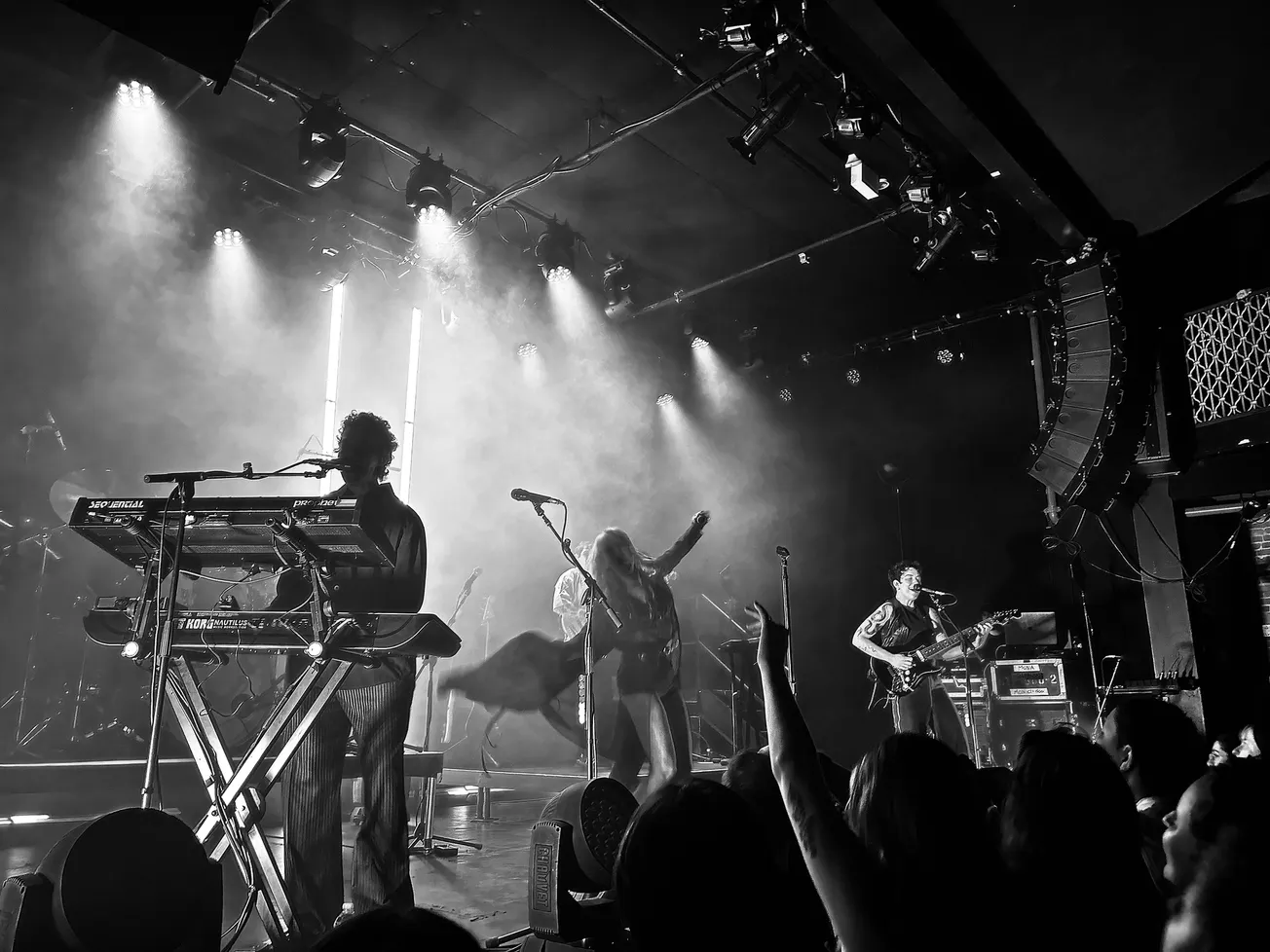
As temperatures surged across the east coast during MUNA’s four-night residency, hundreds of New Yorkers were already lined up outside the Brooklyn theater hours before doors opened. Just after 9pm, MUNA hits the stage with a pearl clutching audacity, as fans packed in the audience teemed feverish with excitement, ready to see the band prove exactly why “It Gets So Hot”.
The pop stars are dressed in all black outfits with only one pop of color: lead singer Katie Gavin’s signature red hair. Gavin leaves her entire self on stage, an exhilarating performer who twirls around seemingly uninhibited by any of the heartbreak laced in the lyrics she’s singing. But it’s her sudden, vulnerable exposure during “So What?”, crouched on the ground and in a blue spotlight that lights the tears in her eyes, that shows just how fully she imbues herself into her performance.
Guitarist Josette Maskin performs with a different precision: she catapults to each corner of the stage, one hand lifted towards her ear, egging on the audience, asking just how loud they can be. The louder they get, the more Maskin seems to thrive in their spotlight. Marching with her guitar lifted in the air, smiling at Gavin during their nightly interaction in “On Call”, or absolutely shredding during an added solo in “Mary Jane”, Maskin’s hypnotic performance keeps eyes on her no matter where they run across the stage.
More closely anchored to one side of the stage is producer Naomi McPherson, a utility player with an underrated soprano belt, responsible for the highest notes and most complex riffs of MUNA’s vocal team. If their production prowess wasn’t enough, they also commanded their section of the stage on two-tiered keyboard synths while juggling between electric guitars and even a keytar. McPherson is the backbone of these arrangements, skillfully in tune to every other member on stage and every layer of these deeply textured songs they led production on.
The Vulnerability of Dancing On The Wall
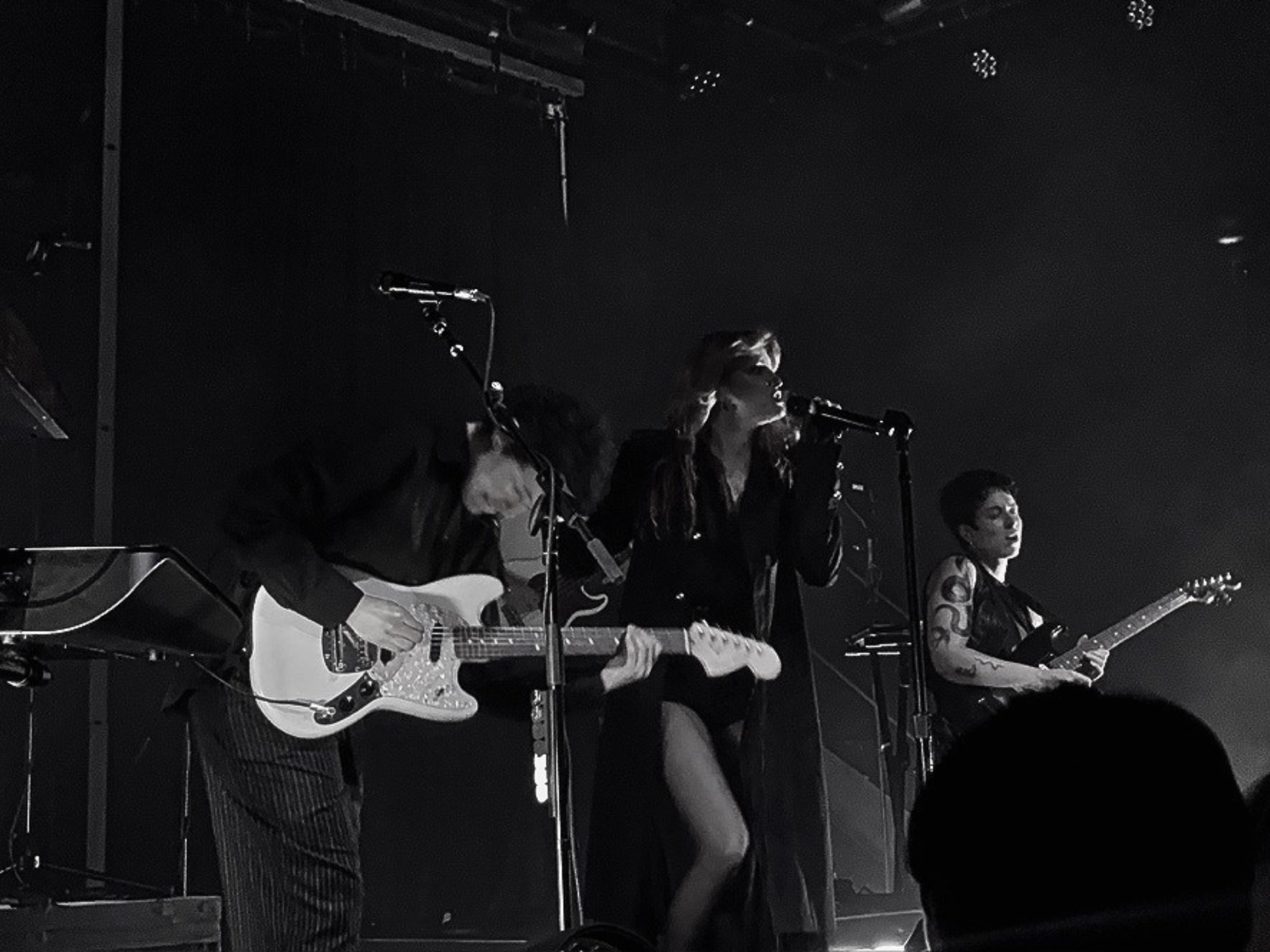
In the elevated live arrangements of Dancing On The Wall, McPherson themself is the first to change the pattern of their own production. During the typically ambient track “Party’s Over”, they stray from the silence and turn to the audience to say “if you’re here you already know what it is. It’s fuck Trump, fuck ICE”.
These are openly queer and nonbinary musicians performing while both LGBT identity and political speech face increasing censorship. The tension they hold bleeds directly into their performance in “Big Stick,” MUNA’s authoritarian critique that follows a time honored tradition of facing political paralysis and choosing to rock out about it.
McPherson and Maskin each jam on electric guitars, gathered around Gavin who leans her mic stand into the audience and raises a hand in the air in defiance. The band’s self-described “most political” song holds their longstanding refusal of censorship with the audacity of their most authentic era yet. This is a band that now willfully acknowledges that life isn’t always “so fun”.
Playing through Dancing On The Wall’s 13-song tracklist, these punchy synth beats carry moments of raw, unfiltered vulnerability, a transparency that rarely surfaces in pop production. But it’s the band’s commitment to this transparency pumps the heartbeat of this album, flowing through the intimate ability to be their whole selves on stage complete with flaws and insecurities.
The penultimate song of the album, “Why Do I Get a Good Feeling?”, best captures this sentiment, set against the pull of wanting to be with someone you shouldn't. Anxiety-inducing uncertainty pulses through the song until Gavin renounces the guilt she’s pent up towards these emotions, and takes the most human route possible: indulgence. She begs: “Don’t ask why / Close your eyes / close the door / and feel it, feel it”.
What follows is an instrumental break that captures the crux of this album in just under a minute and a half. Gavin is handed a violin, playing a tender melody over Maskin’s acoustic guitar and McPherson’s synth keys. Each of their eyes are closed, lost in the groove of their instruments until they suddenly, seamlessly unite on their mics in three part harmony. Rather than suppressing uncertainty or shame, the song climaxes into a live invitation to turn indulgence into shared release.
The rest of the night unfolded into a second act of fan favorites that will likely carry through into their All Things Go headliner set this fall. But both Dancing On The Wall and its intimate live performances mark a new era for the band, as they aim to prove that the height of creative success comes from accepting yourself for who you are.


